
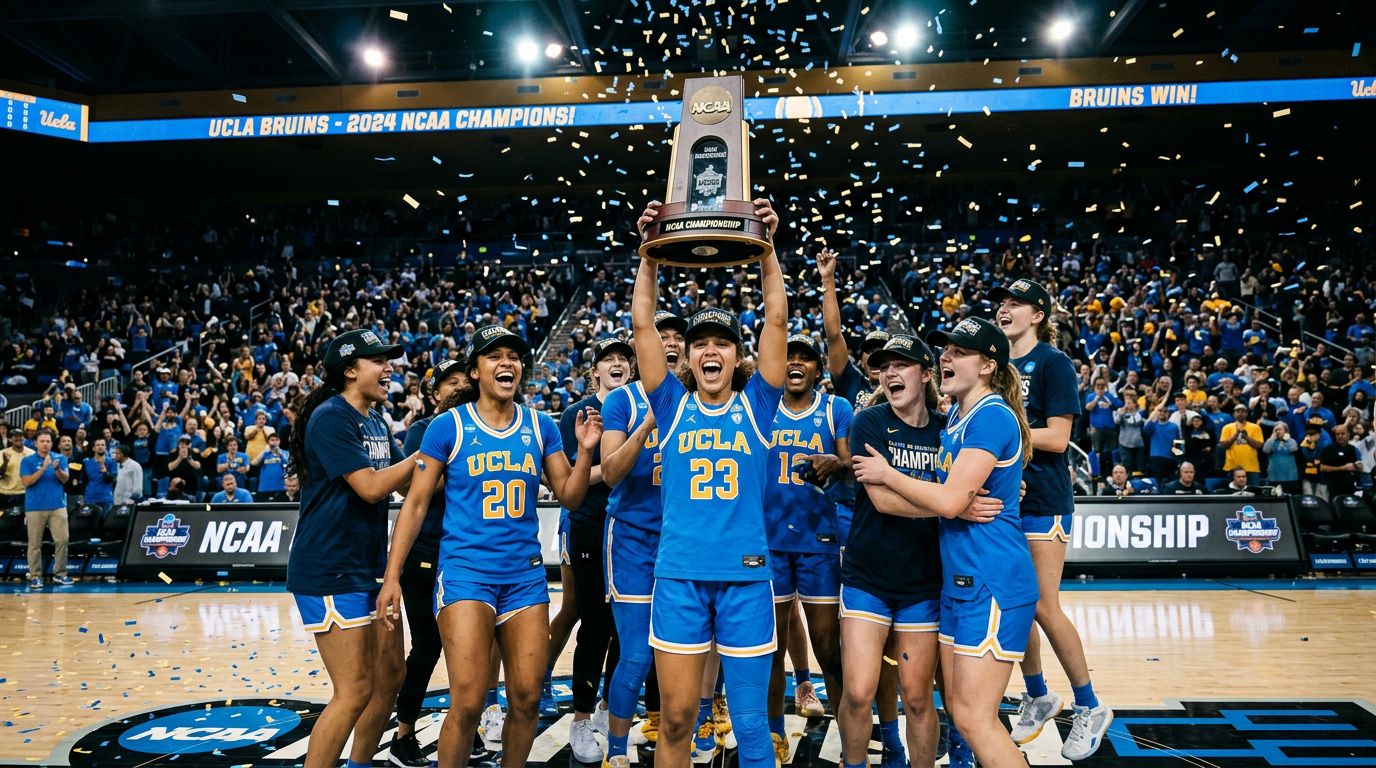
UCLA's victory on Sunday wasn't just a win; it was a landslide. In what many expected to be a tightly contested battle for the soul of women's collegiate basketball, the Bruins didn't just win—they governed the court from the opening tip. For years, the South Carolina Gamecocks have operated as the unchallenged incumbent, a juggernaut that seemed to possess an institutional lock on the national title. However, the political landscape of the NCAA shifted seismically in a 40-minute display of tactical brilliance. This was a realignment of the sport's power dynamics, executed with surgical precision by a program that has long been waiting for its moment in the sun.
Head coach Cori Close, long considered a masterful strategist waiting for her moment of national validation, finally secured her mandate. Her approach was not one of incremental gains but of total systemic overhaul. The Bruins dominated every phase of the game—defense, transition, and set-piece execution—resembling a well-oiled political machine that had spent years studying the vulnerabilities of the established elite. By the middle of the second quarter, it was clear that the Gamecocks’ traditional strongholds in the paint were being dismantled by UCLA's superior spacing and relentless pressure. The South Carolina defense, usually a model of stability, appeared fractured under the constant movement of the Bruins' versatile lineup.
From a leadership perspective, Close’s journey mirrors that of a grassroots organizer who slowly built a coalition of talent capable of unseating a dynasty. This wasn't a fluke victory born of a single star player's performance; it was a collective effort that suggested a change in the sport’s hierarchy. The 'Close Doctrine' focused on a versatile, high-tempo offense that effectively neutralized South Carolina’s size advantage. When the final whistle blew, the scoreboard told a story of a total blowout—a result that sends a clear message to the rest of the collegiate landscape: the status quo has been disrupted. The Bruins showcased a level of depth that many analysts believed only the top-seeded incumbents possessed.
The implications for the 'interstate commerce' of recruiting and national visibility are profound. For years, the East Coast, led by South Carolina and UConn, held a monopoly on the championship discourse. UCLA’s ascent represents a pivot to the West, a realignment that could redirect the flow of blue-chip talent and media resources for years to come. This victory serves as a primary win for the Bruins, proving they can export their brand of basketball to the highest stage and win convincingly against the most established of opponents. The shift from regional powerhouse to national hegemon is now complete, providing a new blueprint for teams looking to break the existing duopoly.
As the confetti settled, the narrative shifted from South Carolina’s historical dominance to UCLA’s new era of governance. In the press room, the mood was one of historic realization. Close’s first championship is not merely a personal milestone; it is a policy statement for the program. The Bruins have established a new platform centered on athletic parity and tactical flexibility. For the rest of the NCAA, the challenge now is how to respond to this new superpower. In sports, as in politics, incumbents are only safe until a better-organized opposition takes the floor. Sunday proved that UCLA is not just a challenger—they are the new administration in women’s basketball.
About Rachel Vance
Justice Department Reporter covering federal courts and Supreme Court rulings impacting public policy.
View full profile and workDiscussion
0Don't have an account? Subscribe for free to join the conversation.
More of today's reporting

Ohio State’s Late‑Game Collapse Sends Shockwaves Through College Football Landscape
SEP 13 • 2026, 4:50 AM ET
Saturday Morning Rundown: Trump’s Irish Sojourn, Ground Zero Sketches and Dreamy Honeymoons
SEP 13 • 2026, 4:50 AM ET
Arch Manning’s Late‑Game Heroics Ignite Texas comeback, toppling No. 1 Ohio State
SEP 13 • 2026, 2:51 AM ET
Celine Dion Overcomes Rare Neurological Disorder to Perform First Concert in Six Years
SEP 13 • 2026, 2:50 AM ET
Unstitching the 1,000‑Year‑Old Story: How the Bayeux Tapestry Became a Political Canvas in London
SEP 13 • 2026, 2:50 AM ET