
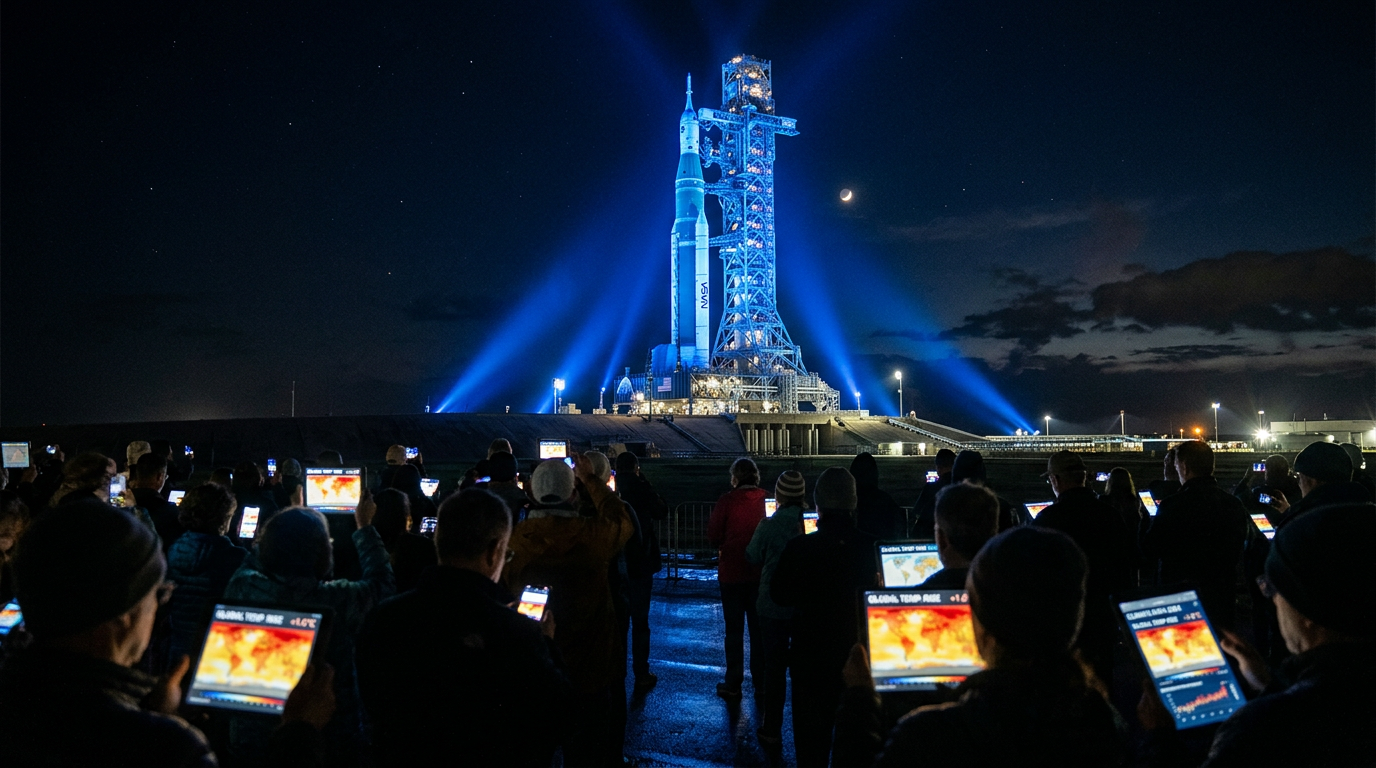
The United States is on the verge of its most significant celestial achievement in over half a century, yet the silence from the American public is increasingly deafening. As NASA prepares its latest contingent of astronauts for a lunar descent, the disconnect between the halls of power in Washington and the kitchen tables of the heartland has never been more pronounced. For the space agency, the Artemis missions represent the pinnacle of human ingenuity; for the taxpayer, they are increasingly viewed as an expensive relic of 20th-century geopolitical posturing.
Recent data suggests that the romanticism of the Apollo era has been replaced by a pragmatic, if not cynical, assessment of federal priorities. For years, polling has consistently indicated that the average American is far more concerned with the existential threats facing the planet today than the glory of planting a flag on another world. This shift in sentiment represents a significant political challenge for an administration that has tethered its scientific legacy to a return to the moon, assuming the public would follow with the same fervor seen in 1969.
According to data from major polling organizations, including the Pew Research Center, the hierarchy of scientific needs is clear. Monitoring the Earth’s changing climate remains the top priority for a majority of voters. In an era of record-breaking heatwaves and catastrophic flooding, the billions of dollars allocated to deep-space habitation are seen by many as a misallocation of resources. Furthermore, the defense of the planet—specifically the tracking and neutralization of near-Earth asteroids—commands significantly higher public support than the establishment of a lunar base. The sentiment is obvious: if the government is to spend billions on space, it should be to protect the world we have, not to explore the one we don’t.
This prioritization creates a legislative minefield. While NASA officials argue that human spaceflight drives technological innovation and inspires the next generation of engineers, politicians are finding it harder to defend the Artemis price tag. In recent budgetary hearings, several lawmakers have questioned the long-term utility of the Lunar Gateway project when compared to the immediate needs of domestic infrastructure and environmental resiliency. The argument for "American exceptionalism" in space is losing its grip on a generation that views the stars through a lens of climate anxiety.
The lack of enthusiasm is not merely a matter of scientific preference; it is a political liability. In past decades, the space race served as a unifying national endeavor. Today, it risks becoming another partisan wedge. Supporters of the program point to the strategic necessity of maintaining a presence in cislunar space, particularly as international competitors like China ramp up their own lunar programs. Yet, for the American voter, the threat of a rising tide or a rogue asteroid feels far more visceral than a geopolitical rivalry on the lunar surface.
As the countdown to the next launch begins, the agency faces a branding crisis as much as a scientific one. To win back the public, NASA must bridge the gap between its lofty ambitions and the grounded concerns of the electorate. Until the mission can be sold as a direct benefit to the life of the average citizen—perhaps through the climate data it helps collect or the planetary defense technologies it fosters—the moon will remain a distant, expensive, and ultimately lonely destination for American policy.
About Sarah Jenkins
Political Correspondent
Congressional Correspondent with a focus on committee hearings and bipartisan legislation. Sarah brings clarity to complex floor debates.
View Full Profile & Work →Continue Briefing
Additional intelligence reports from the network
More Headlines

Sen. Chris Coons Weighs in on Trump's New Nominee for National Intelligence Director
JUN 12 • 2026, 5:00 AM ET
Trump Nominates Jay Clayton to Serve as Director of National Intelligence
JUN 12 • 2026, 5:00 AM ET


Air India Crash Families' Year-Long Battle to Identify Remains of Victims
JUN 12 • 2026, 4:01 AM ET