
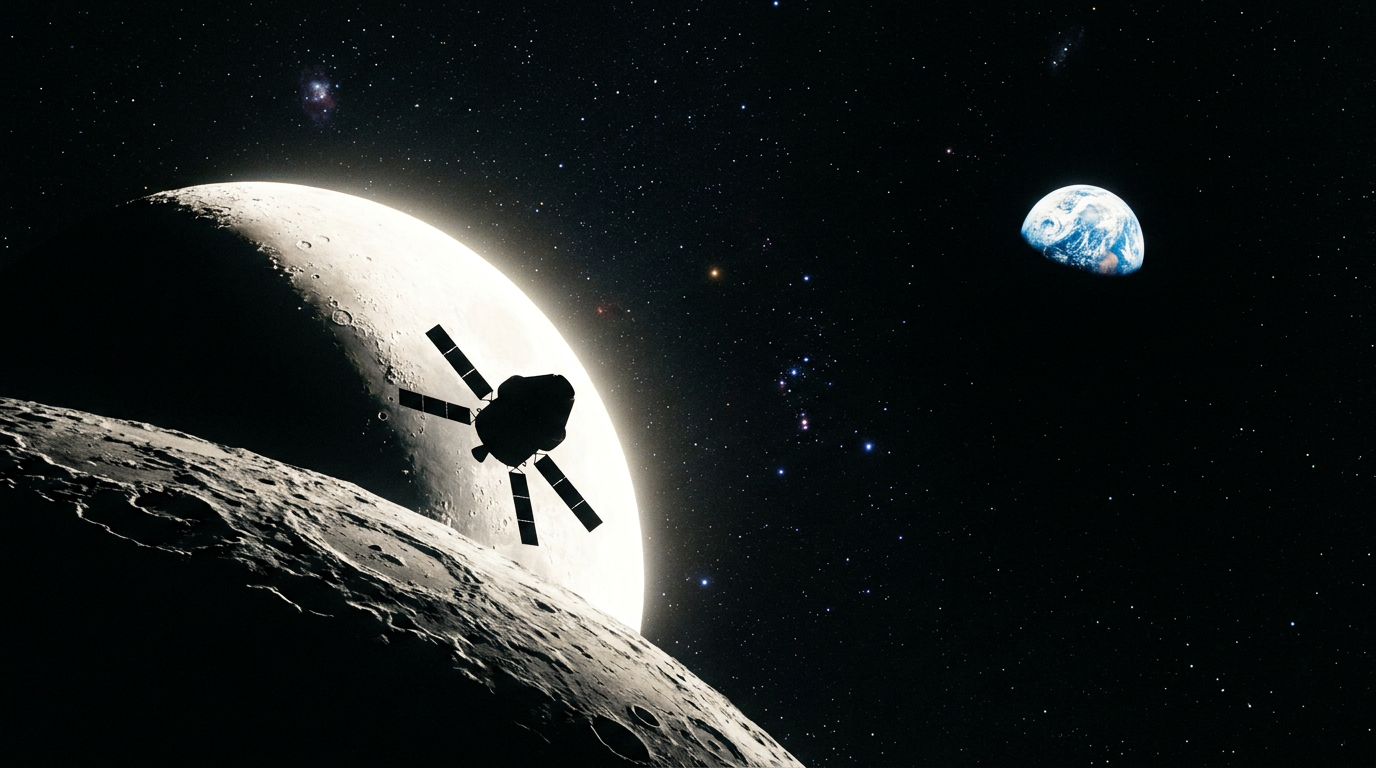
The successful trajectory of the Artemis II mission represents more than just a scientific achievement; it serves as a powerful testament to the shifting tides of international diplomacy and national priority in the twenty-first century. As the crew—comprising Commander Reid Wiseman, Pilot Victor Glover, and Mission Specialists Christina Koch and Jeremy Hansen—prepares for a historic lunar flyby this Monday, the political implications of their journey reverberate far beyond the vacuum of space. From a senior editorial perspective, this mission is the ultimate expression of soft power, signaling to the world that the United States is ready to reclaim its dominance on the lunar frontier while bringing its closest allies along for the ride.
The celebration of Jeremy Hansen’s first spaceflight is particularly poignant from a geopolitical standpoint. Hansen, a Canadian Space Agency astronaut, symbolizes the strength and expansion of the Artemis Accords—a legal framework designed to govern civil exploration and the use of the moon. By including international partners in the core crew of the first crewed lunar mission in over fifty years, the United States is reinforcing its role as the leader of a coalition-based approach to space exploration. This stands in stark contrast to the siloed, intensely nationalistic competition of the twentieth-century Cold War, pivoting instead toward a strategy of shared risk and shared reward.
A symbolic passing of the torch occurred this past weekend when Charlie Duke, the lunar module pilot of Apollo 16, sent a personal message to the crew. Duke, one of only twelve humans to have walked on the lunar surface, represents the original era of American lunar dominance. His communication bridges the gap between the Apollo legacy and the Artemis future, signaling a continuity of American leadership across generations. However, the political landscape has changed significantly since 1972. Today, the mission is as much about domestic budget sustainability and complex private-sector partnerships with entities like SpaceX and Lockheed Martin as it is about planting flags in the lunar regolith.
From the perspective of Washington, the "quiet Easter" mentioned in mission logs masks a high-stakes environment where NASA must constantly justify multi-billion-dollar expenditures to a divided Congress. Every milestone achieved by Artemis II serves as critical leverage for future funding cycles, particularly the upcoming Artemis III mission which aims to land the first woman and first person of color on the lunar surface. The inclusion of Christina Koch on this mission is a calculated and necessary move to fulfill modern social and political mandates for inclusivity in federal programs, ensuring the program maintains broad public support.
Furthermore, the timing of the lunar flyby—occurring amidst a backdrop of increasing lunar interest from geopolitical rivals—places Artemis II at the center of a new soft-power struggle. As the crew races toward the Moon’s embrace, they are carrying the weight of Western democratic values and the promise of transparent, peaceful exploration. The mission serves as a diplomatic signal to both allies and adversaries that the United States remains committed to the deep-space frontier as a strategic priority.
Ultimately, the Artemis II mission is a masterclass in modern political theater and technical prowess. It balances the nostalgia of Apollo veterans like Duke with the pragmatic necessities of modern international alliances. As the world watches the flyby on Monday, the focus will be on the breathtaking images of the lunar far side. Yet, for those in the halls of power, the real story remains the enduring political will required to keep the fire of exploration burning in an era of global uncertainty and fiscal scrutiny.
About Daniel Rossi
Political Correspondent
National Security Reporter covering the Pentagon, intelligence agencies, and cybersecurity threats.
View Full Profile & Work →Continue Briefing
Additional intelligence reports from the network
More Headlines

Sen. Chris Coons Weighs in on Trump's New Nominee for National Intelligence Director
JUN 12 • 2026, 5:00 AM ET
Trump Nominates Jay Clayton to Serve as Director of National Intelligence
JUN 12 • 2026, 5:00 AM ET


Air India Crash Families' Year-Long Battle to Identify Remains of Victims
JUN 12 • 2026, 4:01 AM ET