
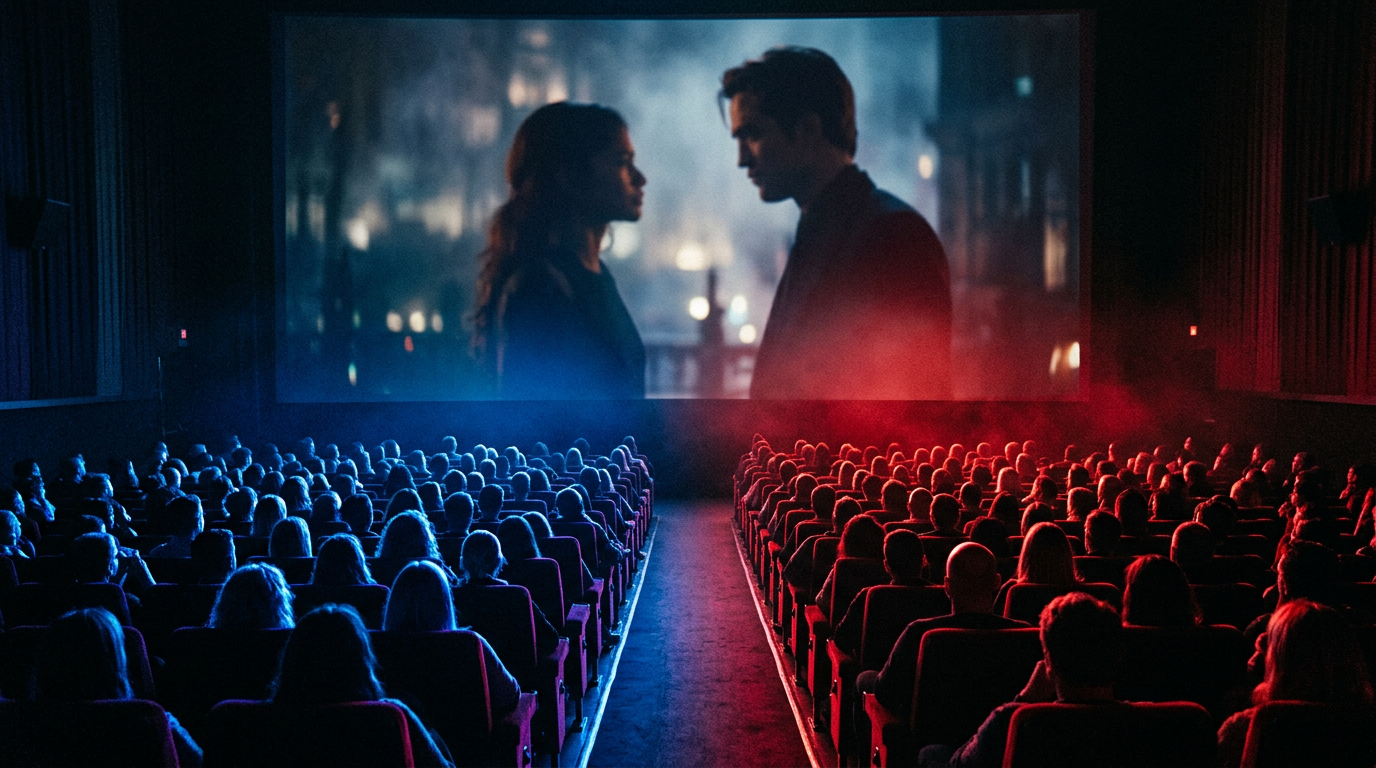
In the high-stakes arena of modern cinema, few developments have ignited a firestorm quite like the central revelation in The Drama. Starring Zendaya and Robert Pattinson as an ostensibly happy engaged couple, the film has rapidly transitioned from a standard romantic-comedy exercise into a cultural Rorschach test. As a senior political editor, I find the vitriol surrounding the film’s 'big twist' remarkably familiar; it mirrors the fractured nature of our national discourse, where a single piece of information is weaponized to validate pre-existing biases rather than to foster genuine understanding.
The plot pivot, which upends the protagonists' relationship just as they prepare for a lifelong commitment, has effectively split audiences into two uncompromising camps. One side views the revelation as a necessary deconstruction of the 'perfect' American union, while the other sees it as an unnecessary betrayal of the audience's trust. This bifurcation is not merely a matter of taste; it is a manifestation of the same ideological rigidity we observe in polling data regarding institutional trust. Much like a leaked memo or a surprise deposition in a congressional hearing, the twist in The Drama forces the viewer to reconcile a comfortable narrative with a jarring new reality that many are unprepared to accept.
The casting of Zendaya and Pattinson adds a layer of 'celebrity politics' to the mix. These aren't just actors; they are symbols of a generational shift in how we perceive authority, romance, and transparency. When their characters’ foundation crumbles, it feels less like a fictional tragedy and more like a commentary on the perceived fragility of modern institutions. According to industry analysis from Variety and reports by The New York Times, the audience reaction has been unusually focused on the ethics of the characters' decisions, shifting the conversation away from cinematic craft and into the realm of moral philosophy—a shift often seen in modern political campaigning where character assassination takes precedence over policy.
Furthermore, the 'divided audience' phenomenon reported by The New York Times highlights a growing trend where even the arts cannot escape the gravity of polarization. We no longer just watch movies; we audit them for alignment with our own worldviews. If the twist doesn't fit the expected arc of 'justice' or 'growth,' it is labeled as a failure of leadership—or in this case, a failure of the director’s vision. This demand for narrative purity is a direct cousin to the political litmus tests that now dominate primary elections and social media activism.
Ultimately, The Drama serves as a reminder that the personal is political. The way we react to a fictional engagement being upended by a secret says more about our threshold for transparency than it does about the film's screenplay. In an era where 'truth' is often a matter of perspective, the revelation at the heart of this film serves as a proxy for the secrets we suspect are lurking behind every official statement. Whether the film holds up as a masterpiece of the rom-com genre is secondary to its role as a mirror, reflecting a society that is increasingly incapable of finding common ground, even in the relative safety of a darkened theater. As we analyze the fallout of this cinematic controversy, we must ask if we are truly upset about the plot, or if we are simply exhausted by the relentless uncertainty of the world outside the screen.
About Michael O'Connor
Political Correspondent
State Politics Editor. Michael monitors gubernatorial races, statehouse shifts, and local ballot initiatives.
View Full Profile & Work →Continue Briefing
Additional intelligence reports from the network
More Headlines


Ukraine's Drone Strikes: A 'Justified' Response to Russian Aggression?
MAY 18 • 2026, 5:01 AM ET
Driver of Crashed Train in Thailand Tested Positive for Drugs, Raises Concerns Over Safety
MAY 18 • 2026, 4:02 AM ET
Eurovision 2024: Bulgaria's Dara Takes the Crown, Ukraine Breaks a Record
MAY 18 • 2026, 4:01 AM ET
