
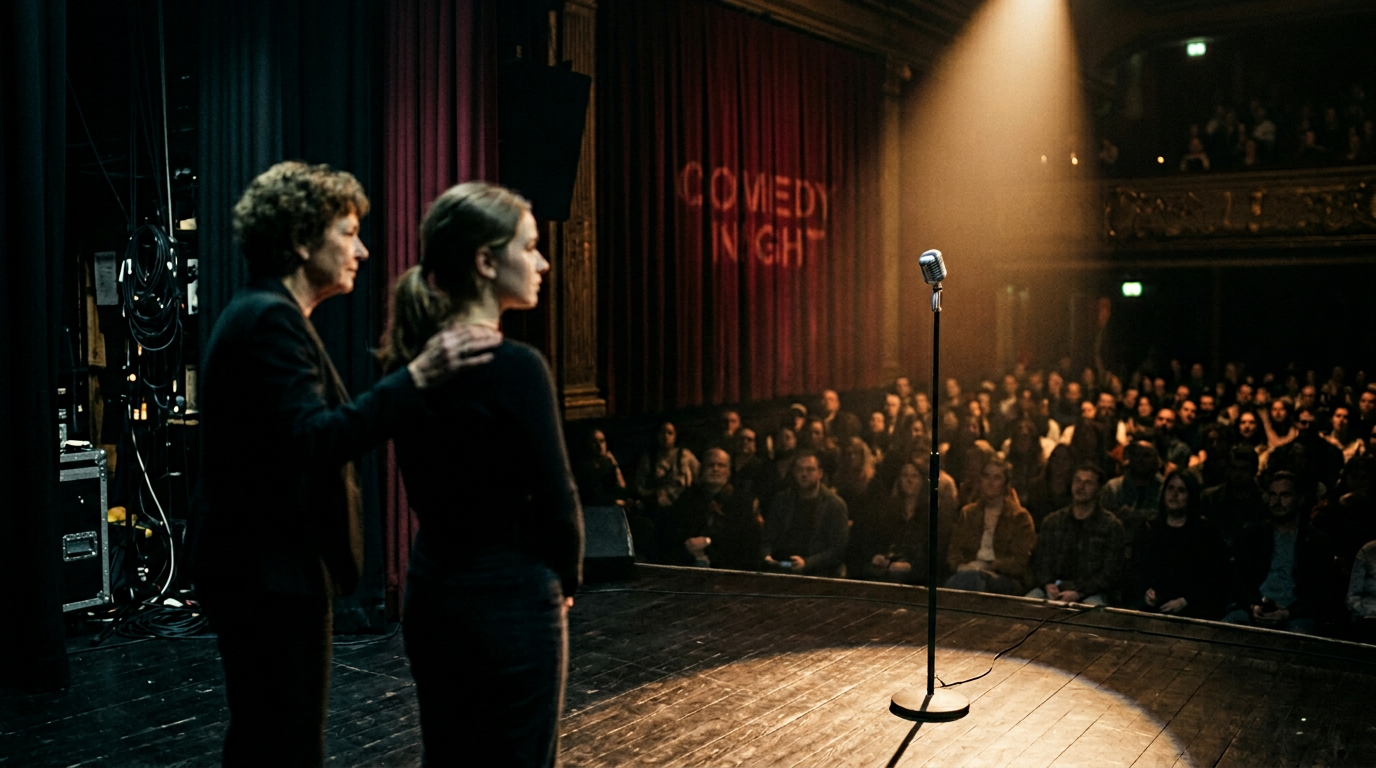
The conclusion of HBO’s critically acclaimed series 'Hacks' marks more than just the end of a television era; it signifies a milestone in the cultural-political dialogue regarding generational friction and the labor of comedy. As production wrapped earlier this year, the showrunners—Lucia Aniello, Paul W. Downs, and Jen Statsky—offered a reflective look at a journey that captured the zeitgeist of the mid-2020s. From my vantage point as a senior political editor, 'Hacks' has always been less about the jokes and more about the power dynamics inherent in a rapidly changing America.
The central tension between Deborah Vance, an establishment icon portrayed with ferocity by Jean Smart, and Ava Daniels, a progressive millennial writer played by Hannah Einbinder, serves as a blueprint for the broader ideological debates occurring within our own legislative halls. For several seasons, we watched as Vance’s 'pull yourself up by your bootstraps' ethos clashed with Daniels’ insistence on systemic accountability and social justice. This was not merely entertainment; it was a televised focus group on how to navigate the divide between traditionalist pragmatism and radical idealism.
As the New York Times recently detailed, the final days on set were bittersweet, captured in a series of photographs that highlight the intimacy of a production that redefined the 'woman-led' comedy. But beyond the aesthetics, we must consider the political economy of the show. At a time when 'cancel culture' was frequently used as a rhetorical cudgel in stump speeches, 'Hacks' chose to explore the nuance of redemption and the evolution of humor. It asked a difficult question: Can the architects of the past learn to speak the language of the future without losing their professional soul or their edge?
Furthermore, the show’s award-winning run demonstrated a significant shift in market power. By centering a woman over seventy as a formidable, flawed, and financially independent protagonist, the series challenged the political invisibility of the aging population—a demographic that remains a powerhouse at the ballot box yet is frequently sidelined in pop culture representations. The showrunners' reflections emphasize a commitment to authenticity that resonated far beyond the Hollywood Hills, impacting how we discuss female ambition and career longevity in the public square.
As 'Hacks' takes its final bow, its legacy remains its ability to find the humor in the friction. In our current political landscape, where dialogue often breaks down at the first sign of disagreement, the relationship between Deborah and Ava offered a rare, if fictional, model for constructive conflict. They didn’t always agree, and they often hurt one another, but they remained in the room together. In a polarized world, that persistence is perhaps the most radical act of all. The 'last laugh' isn't just a punchline; it’s a testament to the endurance of human connection across the deepest of ideological divides.
About Maya Patel
Political Correspondent
Immigration Policy Correspondent analyzing border security, asylum laws, and visa regulations.
View Full Profile & Work →Continue Briefing
Additional intelligence reports from the network
More Headlines


Ukraine's Drone Strikes: A 'Justified' Response to Russian Aggression?
MAY 18 • 2026, 5:01 AM ET
Driver of Crashed Train in Thailand Tested Positive for Drugs, Raises Concerns Over Safety
MAY 18 • 2026, 4:02 AM ET
Eurovision 2024: Bulgaria's Dara Takes the Crown, Ukraine Breaks a Record
MAY 18 • 2026, 4:01 AM ET
