
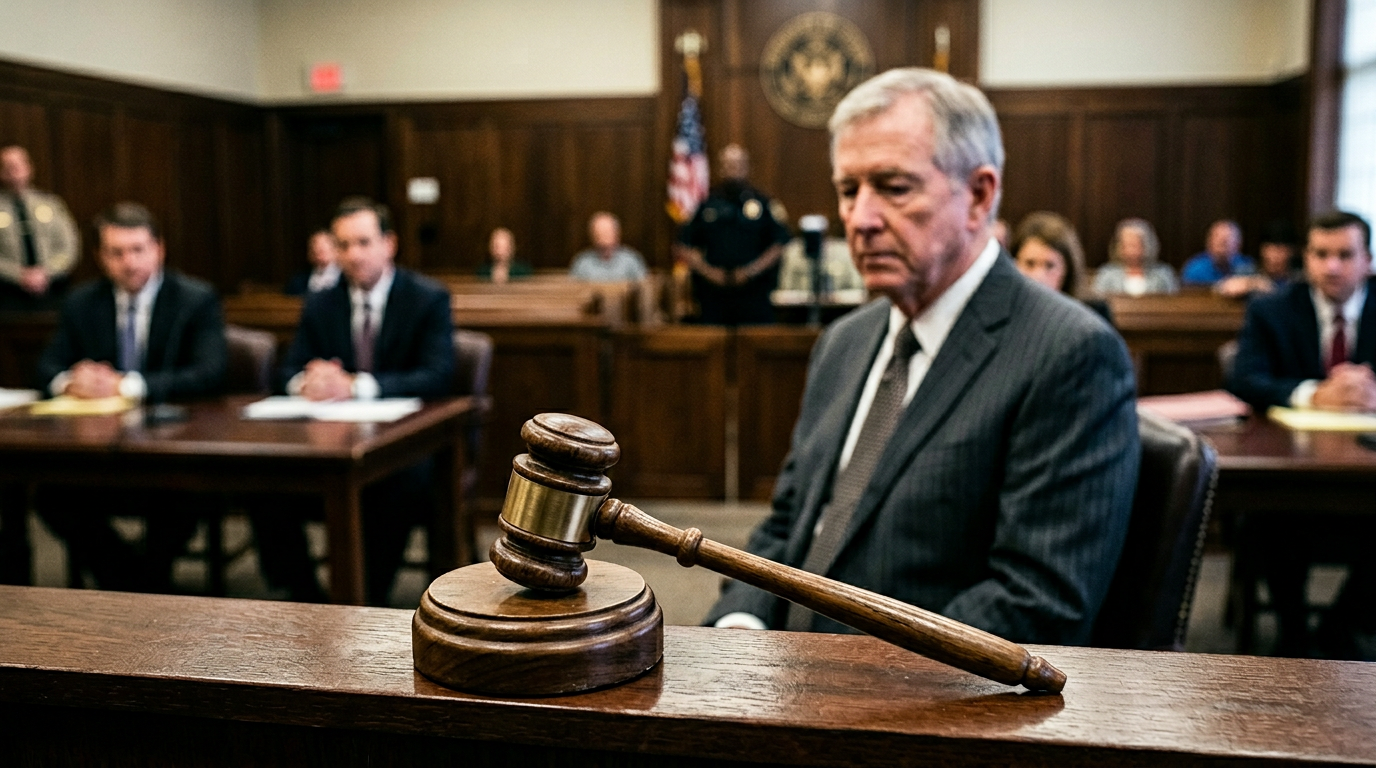
The trial of Claud "Tex" McIver remains one of the most chilling case studies in the intersection of wealth, domestic tragedy, and judicial scrutiny. At the heart of the matter lies a simple, devastating question: Can a man’s reaction to his wife’s death prove his guilt better than any forensic evidence? When Diane McIver was shot in the back through the seat of their SUV in 2016, Tex claimed it was a horrific accident—an unintended discharge of a firearm he held for protection while sleeping. However, as the legal proceedings unfolded, a different narrative emerged, one painted not with the colors of sorrow, but with the stark lines of financial pragmatism.
During the high-profile trial, the prosecution leaned heavily on the testimony of those closest to the couple. Friends and associates took the stand, describing a man whose immediate aftermath of loss was characterized by a startling lack of mourning. Instead of a husband consumed by the void left by his partner, witnesses described a Tex McIver who seemed hyper-focused on his wife’s estate. The testimony suggested that within days of the tragedy, McIver was already inquiring about the liquidation of assets, the status of Diane’s life insurance, and his own social standing. This perceived indifference became the cornerstone of the state’s argument: that the shooting was not a sleepy mistake, but a calculated move to secure a luxurious lifestyle that was beginning to slip through his fingers.
The trial highlighted a fascinating psychological battleground. For the jury, the case became a referendum on the "appropriate" way to grieve. Prosecutors argued that McIver’s actions—such as the auctioning off of Diane’s extensive wardrobe and jewelry shortly after her death—were the actions of a man who had already moved on because he had planned the transition. Defense attorneys, conversely, argued that grief is a non-linear and highly personal experience. They posited that Tex’s focus on finances was merely a coping mechanism for a man used to managing complex affairs, or perhaps a pragmatic necessity in the face of rising legal fees and a changing economic reality.
Beyond the courtroom walls, the McIver case sparked a national conversation about the reliability of behavioral evidence. Unlike cases built on DNA or clear surveillance footage, the conviction of Tex McIver relied on the interpretation of his character. Was he a cold-blooded opportunist or a confused, elderly man who made a fatal error and then reacted poorly? The eventual overturning of his initial murder conviction by the Georgia Supreme Court—due to the jury not being allowed to consider a lesser charge of involuntary manslaughter—only added more complexity to the saga. Yet, even as the legal tides shifted, the image of the husband counting coins while the widow's veil was still fresh remains the most haunting aspect of the case. It serves as a stark reminder that in the eyes of the law, and the public, what you do after a tragedy can be just as incriminating as the tragedy itself.
About Sophia Martinez
Political Correspondent
Housing and Urban Development Reporter covering affordable housing initiatives and zoning regulations.
View Full Profile & Work →Continue Briefing
Additional intelligence reports from the network
More Headlines

Sen. Chris Coons Weighs in on Trump's New Nominee for National Intelligence Director
JUN 12 • 2026, 5:00 AM ET
Trump Nominates Jay Clayton to Serve as Director of National Intelligence
JUN 12 • 2026, 5:00 AM ET


Air India Crash Families' Year-Long Battle to Identify Remains of Victims
JUN 12 • 2026, 4:01 AM ET