
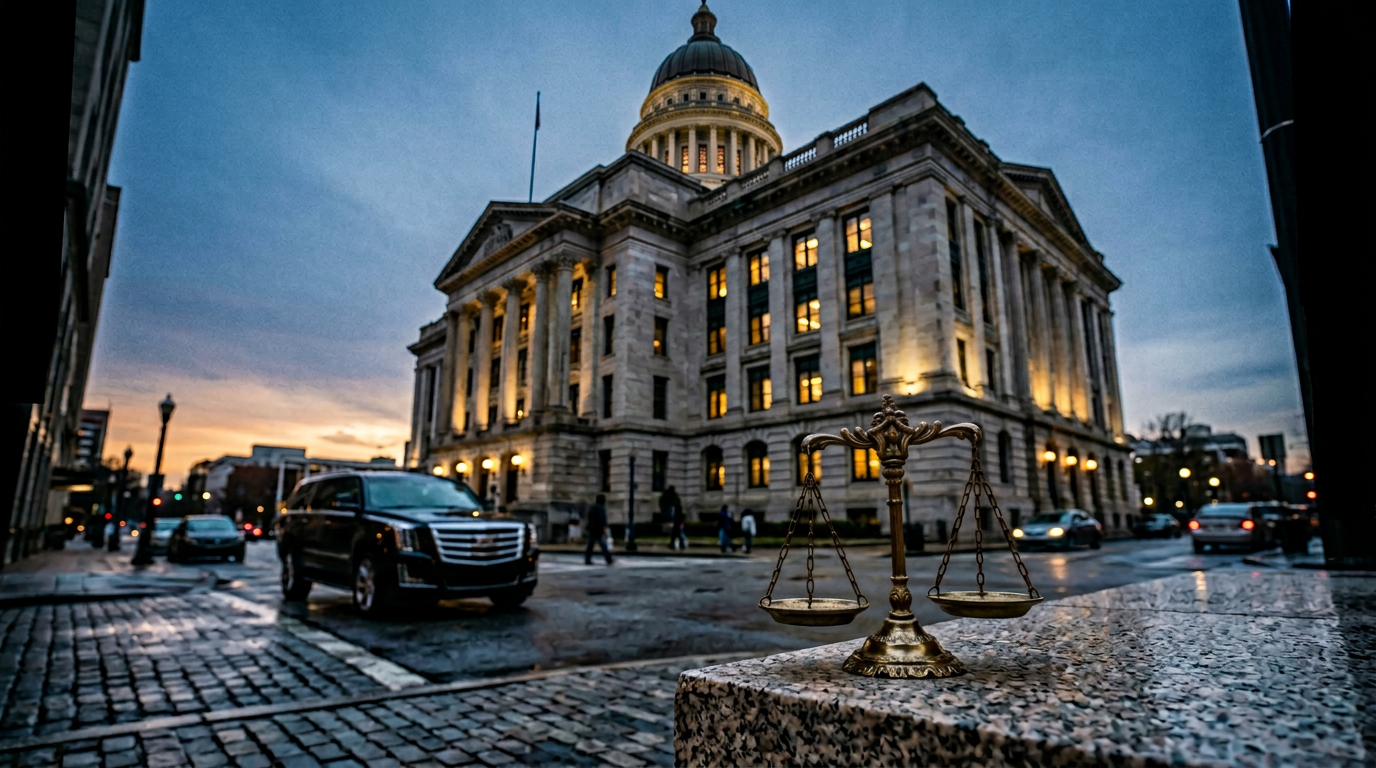
The high-stakes legal drama surrounding Claud "Tex" McIver, a prominent Atlanta attorney, took a significant turn this week as a Fulton County Superior Court judge denied bond, ensuring that the defendant remains in custody as he awaits trial for the shooting death of his wife, Diane McIver. The case, which has captivated the Georgia political and legal landscape since its inception, centers on a fatal incident occurring in late 2016 within the confines of a luxury SUV. While McIver maintains the shooting was a tragic accident involving a firearm discharging unexpectedly, the prosecution has painted a far more calculated picture of financial desperation and intentional harm.
Diane McIver was a highly successful businesswoman and the president of Corey Airport Services, while Tex McIver was a partner at a prestigious law firm with deep ties to the Republican establishment in Georgia. This intersection of corporate power and political influence has made the case a focal point for those examining how the justice system handles wealthy, well-connected individuals. The prosecution’s core argument rests on the assertion that Tex McIver was facing mounting financial pressures and sought to gain control of his wife’s substantial assets to maintain his lavish lifestyle and cover significant personal expenses. They allege that the motive for the shooting was purely fiscal, driven by the disparity between his income and his spending habits.
During the recent bond hearing, prosecutors presented compelling evidence suggesting that McIver’s financial situation was increasingly precarious at the time of the incident. They argued that his motive was rooted in the need to bridge the gap between his lifestyle requirements and his actual liquidity, a claim that the defense vehemently disputes. The defense team, led by some of the state's most seasoned trial lawyers, continues to assert that the gun discharged accidentally while McIver was in the backseat of the vehicle. They claim he had fallen asleep with the firearm in his lap, which he had requested for protection as the vehicle traveled through a perceived dangerous area of Atlanta. They argue that there was absolutely no intent and that the couple shared a deeply loving, mutually supportive relationship.
The judge’s decision to deny bond reflects the gravity of the murder charges and the potential risk factors associated with a defendant of McIver's stature and international resources. In high-profile cases like this, the court must balance the presumption of innocence with the need to ensure the defendant's appearance at trial and the overall safety of the community. For many observers in the Atlanta metro area, the ruling signals that the court is not swayed by McIver’s previous professional standing or his long-standing connections within the state’s political elite. It underscores a shift toward holding even the most influential figures to the same standards as any other citizen accused of a violent crime.
As the trial date approaches, the legal community is closely watching how the financial evidence will be weighed against the narrative of an accidental discharge. The prosecution’s ability to prove a "money-driven motive" is crucial to their case for malice murder. Conversely, the defense will need to convince a jury that the tragedy was purely a result of negligence or a freak accident involving a firearm. The case serves as a stark reminder of how quickly life can unravel for those at the heights of social and professional success. With the bond denied, Tex McIver will now have to prepare his defense from behind bars, a reality that underscores the exceptionally high stakes of this judicial proceeding and the scrutiny of the Georgia public.
About Elena Rostova
Political Correspondent
Senior Political Analyst covering federal policy and legislative tracking. Elena spent 10 years inside the Beltway before joining DailyBorg to focus on autonomous fact-checking.
View Full Profile & Work →Continue Briefing
Additional intelligence reports from the network
More Headlines

Sen. Chris Coons Weighs in on Trump's New Nominee for National Intelligence Director
JUN 12 • 2026, 5:00 AM ET
Trump Nominates Jay Clayton to Serve as Director of National Intelligence
JUN 12 • 2026, 5:00 AM ET


Air India Crash Families' Year-Long Battle to Identify Remains of Victims
JUN 12 • 2026, 4:01 AM ET