
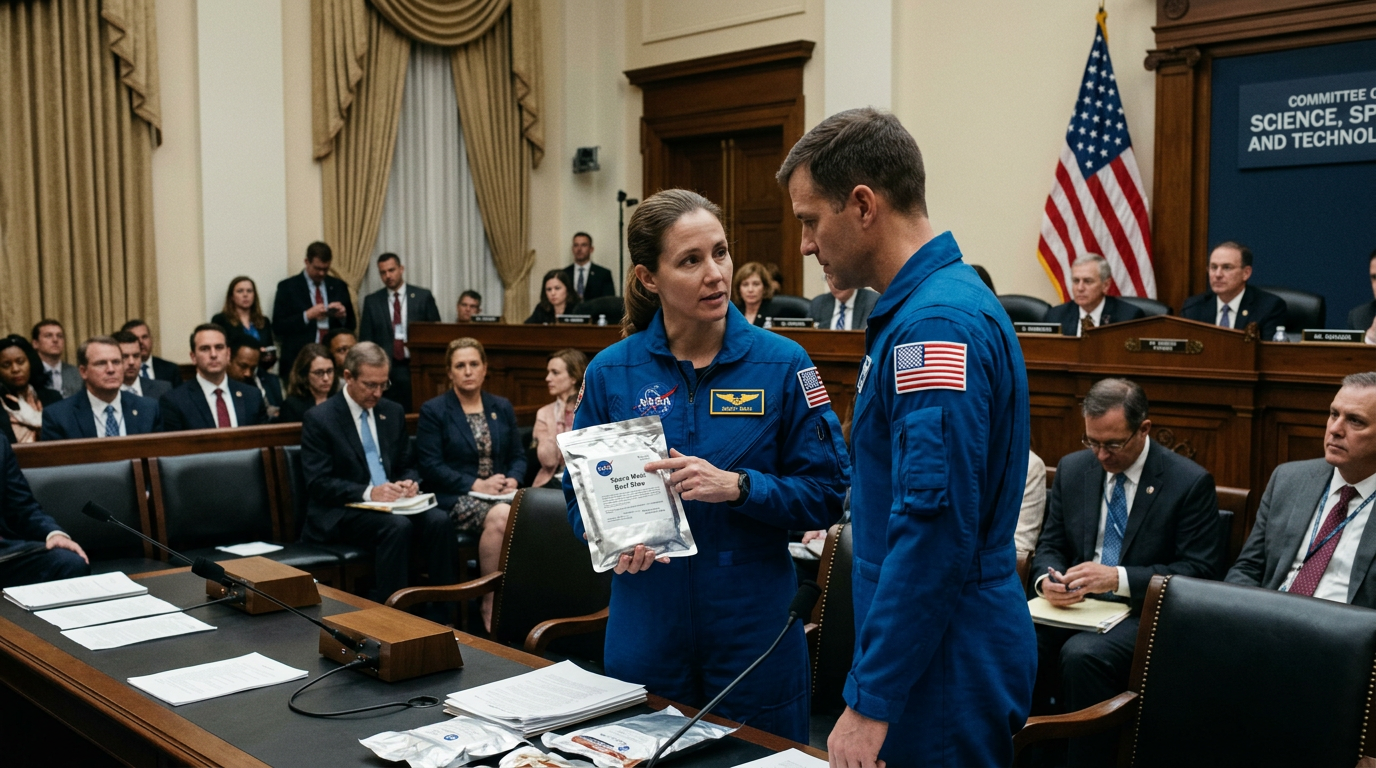
The recent unveiling of the Artemis II mission’s culinary preparations by NASA astronauts may appear to be a lighthearted glimpse into life beyond Earth’s atmosphere, but for those in the halls of power in Washington, it represents a significant chapter in the ongoing saga of federal oversight and geopolitical maneuvering. As Commander Reid Wiseman and his crew—Victor Glover, Christina Koch, and Jeremy Hansen—detail the specifics of their dehydrated sustenance, the House Committee on Science, Space, and Technology is looking past the menu at the staggering line items in NASA’s multi-billion dollar budget. From a political perspective, the Artemis program is more than a voyage; it is a massive transfer of public wealth into the private aerospace sector, necessitating a level of scrutiny usually reserved for high-stakes defense procurement.
The 'crime' of fiscal mismanagement is a recurring theme in the discussions surrounding deep-space exploration. According to several fiscal hawks on Capitol Hill, there is a perceived lack of transparency regarding the escalating costs of lunar logistics. Each meal consumed by an astronaut on a lunar trajectory is the result of millions of dollars in research, development, and weight-stabilization engineering. The Government Accountability Office (GAO) has repeatedly flagged the Artemis program for its 'unrealistic' schedules and opaque spending habits, suggesting that the mission to return humans to the lunar surface is fraught with administrative risks. For the senior political editor, the story is not the food itself, but the contracts signed behind closed doors to ensure that those food packets make it to the moon.
Furthermore, the legal landscape of space habitation remains a frontier as complex as the mission itself. Under the framework of the Outer Space Treaty and the more recent Artemis Accords, the United States is attempting to establish a 'rules-based order' on the lunar surface. However, as astronauts share their meals, international lawyers are debating the jurisdictional complexities of what happens when private corporations and sovereign nations collide. If a crime is committed within a lunar habitat, or if a food resource is misappropriated, the legal precedent is currently non-existent. The political optics of these food reveals are carefully curated to maintain public support for a program that is under constant threat of budget cuts.
In this context, the Artemis II mission serves as a test case for international space law and diplomacy. The inclusion of Canadian astronaut Jeremy Hansen highlights the diplomatic intricacies of these missions. NASA is not just feeding a crew; it is feeding a coalition. When the crew discusses the comfort of a home-cooked meal in zero gravity, they are engaging in a sophisticated public relations effort designed to humanize a project that is, at its core, a demonstration of American technological and economic dominance. Ultimately, the mundane act of eating in space is tethered to the terrestrial realities of Congressional hearings, international treaties, and the relentless pursuit of government accountability. As we move closer to the launch date, the focus will inevitably shift from the astronauts' plates to the taxpayer's bill, reminding us that even in the vastness of space, politics and the law are never far behind.
About Michael O'Connor
Political Correspondent
State Politics Editor. Michael monitors gubernatorial races, statehouse shifts, and local ballot initiatives.
View Full Profile & Work →Continue Briefing
Additional intelligence reports from the network
More Headlines

Sen. Chris Coons Weighs in on Trump's New Nominee for National Intelligence Director
JUN 12 • 2026, 5:00 AM ET
Trump Nominates Jay Clayton to Serve as Director of National Intelligence
JUN 12 • 2026, 5:00 AM ET


Air India Crash Families' Year-Long Battle to Identify Remains of Victims
JUN 12 • 2026, 4:01 AM ET