
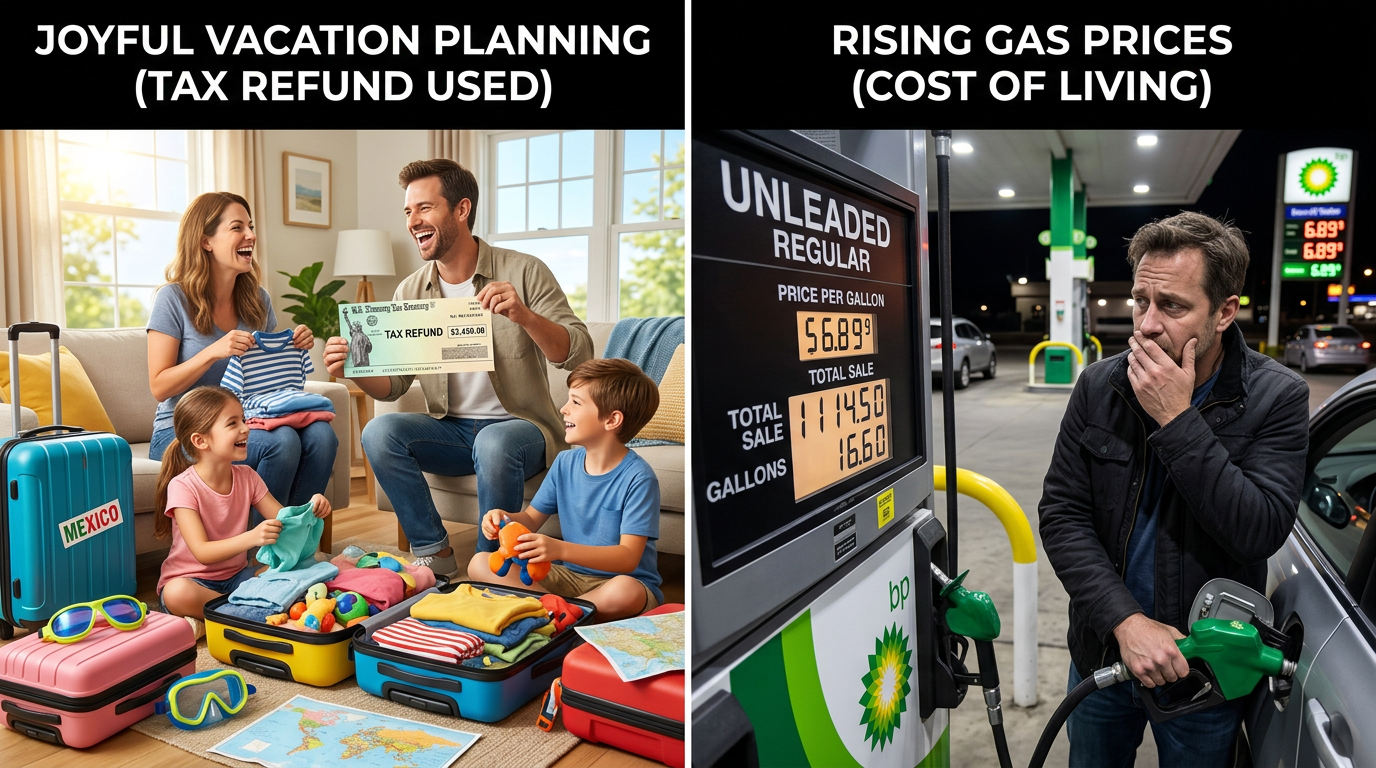
The 2026 tax filing season has arrived with a surprising silver lining for many Americans: the Internal Revenue Service (IRS) is reporting that average refund checks are trending notably higher than in previous cycles. For the Treasury Department and the administration, this represents a potential boon to consumer spending—a critical engine for the national economy. However, as senior analysts look deeper into the data, a more complex narrative emerges, one that pits the joy of an unexpected windfall against the relentless pressure of logistical costs and energy inflation.
According to reports from NPR, the increased liquidity in the hands of the public is being utilized in vastly different ways across the socio-economic spectrum. On one hand, there is a visible segment of the population that is 'splurging.' These consumers are funneling their refunds into the hospitality and luxury sectors—booking long-delayed vacations or upgrading home electronics. This behavior suggests a resilient consumer confidence that many economists feared would have cooled by mid-2026. From a business perspective, this injection of cash provides a vital seasonal boost to retail sectors that often see a dip following the holiday hangover. The surge in discretionary spending provides a temporary buffer for businesses facing high inventory costs.
Conversely, a significant portion of the electorate is finding that their 'extra' cash is vanishing before it can be used for anything beyond survival. The rising cost of gasoline and home heating remains a persistent shadow over the domestic economy. For these families, the refund check isn't a ticket to a luxury getaway; it is a necessary subsidy to cover the daily commute to work or the weekly grocery run. This dichotomy highlights the uneven nature of the current economic recovery, where high-level growth statistics often mask the day-to-day struggles of those in the lower and middle-income brackets. When a refund is swallowed by the pump, the psychological benefit of a 'bonus' from the government is quickly neutralized.
Politically, this trend is a double-edged sword. The administration will likely tout the higher refund averages as a success of recent tax code adjustments and fiscal management. They will argue that putting more money back into the pockets of citizens is the ultimate goal of their economic policy. However, opposition figures are already pointing to the energy market as evidence of failed policy. If a five-hundred-dollar increase in a tax refund is immediately swallowed by a five-hundred-dollar increase in annual fuel expenditures, the net gain for the average voter is effectively zero, creating a messaging nightmare for incumbents.
Furthermore, the Federal Reserve continues to monitor these spending patterns with a hawk-like intensity. If the 'splurging' identified in the NPR report leads to a renewed spike in demand-pull inflation, the central bank may feel pressured to maintain or even raise interest rates, potentially dampening the housing market further. Ultimately, while the headline of 'higher refunds' sounds like a win for the American taxpayer, the reality of the 2026 fiscal landscape is defined by a tug-of-war between liquid wealth and the rising cost of living. As the final filings are processed, the true impact on the upcoming election cycle will depend on whether voters feel richer in their bank accounts or poorer at the pump. The business world must now navigate this bifurcated consumer base, catering to those with cash to burn while acknowledging the millions for whom the refund is merely a life raft.
About Sophia Martinez
Political Correspondent
Housing and Urban Development Reporter covering affordable housing initiatives and zoning regulations.
View Full Profile & Work →Continue Briefing
Additional intelligence reports from the network
More Headlines

Sen. Chris Coons Weighs in on Trump's New Nominee for National Intelligence Director
JUN 12 • 2026, 5:00 AM ET
Trump Nominates Jay Clayton to Serve as Director of National Intelligence
JUN 12 • 2026, 5:00 AM ET


Air India Crash Families' Year-Long Battle to Identify Remains of Victims
JUN 12 • 2026, 4:01 AM ET